
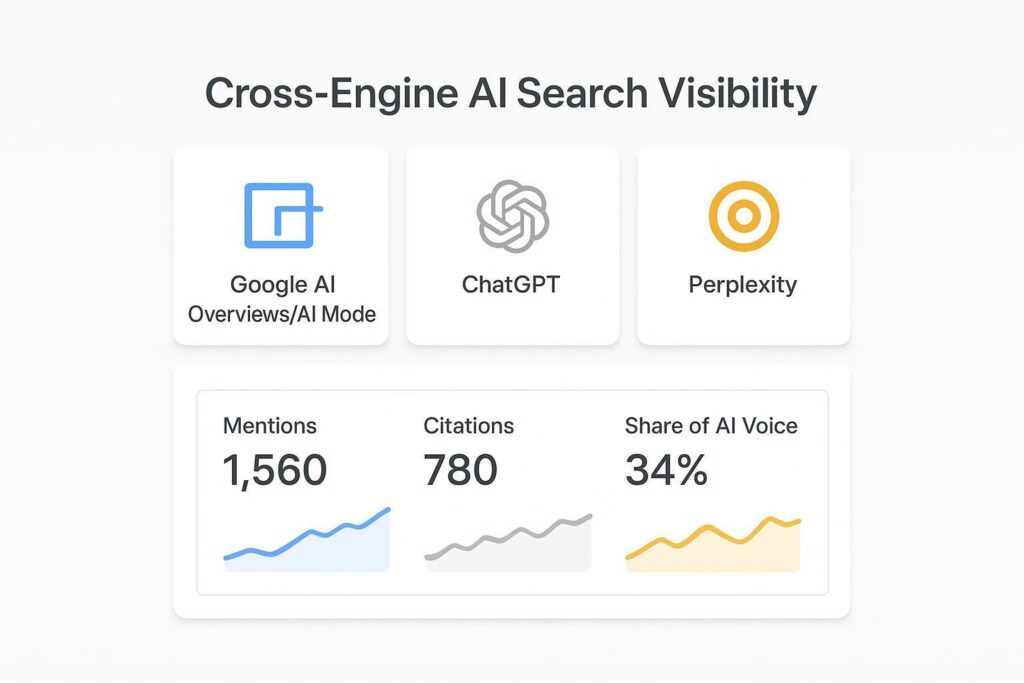
The digital marketing landscape is evolving faster than ever. Artificial intelligence is changing how people search for information, discover brands, compare products, and make purchasing decisions. In 2026, businesses can no longer rely exclusively on traditional search engine rankings to remain visible online.
Google AI Overviews, AI Mode, ChatGPT, Gemini, Perplexity, and other AI-powered platforms are reshaping the customer journey. Instead of simply browsing a list of websites, users increasingly expect direct answers, personalized recommendations, summarized information, and conversational experiences.
For businesses, this transformation creates both challenges and opportunities. Traditional SEO remains important, but online visibility now extends beyond search rankings to brand mentions, AI citations, authority, content quality, and presence across multiple digital platforms.
In this guide, we explore the most important AI SEO trends and digital marketing insights for 2026—and how businesses can adapt to stay competitive, attract qualified customers, and grow their online presence.
1. AI Search Is Reshaping the Search Engine Landscape
Search is no longer limited to traditional search engine results pages. AI-powered search experiences are changing how users interact with information, explore topics, and discover businesses.
Google AI Overviews and AI Mode can help users answer complex questions, explore related topics, and complete research without following the traditional search journey. Meanwhile, platforms like ChatGPT and Perplexity are becoming alternative destinations for product research, recommendations, and problem-solving.
This doesn’t mean Google is becoming irrelevant. Instead, search is expanding into a more diverse ecosystem where users can discover information across search engines, AI assistants, social platforms, and other digital channels.
Google’s own 2026 search guidance highlights the growth of AI-powered experiences and more complex, conversational searches.
What businesses should do:
- Continue investing in traditional SEO and organic search visibility.
- Create content that answers real customer questions.
- Optimise pages for informational, commercial, and transactional intent.
- Build visibility across Google and emerging AI discovery platforms.
- Track how AI search influences leads, conversions, and brand discovery.
The goal is no longer just to rank—it is to become a trusted source wherever your potential customers search.
2. GEO and AEO Are Becoming Essential to Modern SEO
Two of the most important emerging disciplines in digital marketing are Generative Engine Optimization (GEO) and Answer Engine Optimization (AEO).
Traditional SEO focuses primarily on improving visibility in search engine results. GEO and AEO expand that strategy by helping brands become discoverable, understandable, and credible within AI-generated answers.
When someone asks an AI assistant, “What is the best digital marketing agency for a small business in Toronto?” the goal is not simply to rank on Google for that keyword. The goal is to make your brand a credible candidate for the answer.
This requires a combination of:
- Clear and authoritative website content.
- Strong brand recognition and online mentions.
- Relevant third-party references and citations.
- Consistent business information.
- Expertise supported by real experience.
- Content that AI systems can easily understand and interpret.
GEO is increasingly being treated as a complementary strategy to traditional SEO, rather than a replacement for it.
The new visibility equation:
Modern Search Visibility
SEO + GEO + AEO + Brand Authority
Rank in search · Get cited by AI · Become a trusted brand
Businesses that integrate these strategies into a unified marketing approach will be better positioned to compete in the evolving search environment.
3. Search Intent Matters More Than Keyword Density
Keyword research remains a fundamental part of SEO, but the way people search is changing.
Users increasingly ask detailed questions using natural language. Instead of searching for short phrases such as “best SEO agency,” they may ask:
-
Which SEO agency specializes in local businesses in Toronto?
-
How much does SEO cost for a small business in Canada?
-
What is the difference between SEO and GEO?
-
Which digital marketing strategy generates the best ROI?
-
How can my business appear in Google AI Overviews?
These searches reveal more context, expectations, and purchasing intent.
Modern search strategies must move beyond individual keywords and focus on the complete questions, concerns, and decisions customers make throughout their journey.
How to adapt your content strategy
Instead of creating dozens of pages targeting variations of the same keyword, develop comprehensive resources around specific topics and search intent.
Organise content into:
-
Informational: Guides, tutorials, explanations, and educational content.
-
Commercial: Comparisons, reviews, recommendations, and best-of lists.
-
Transactional: Service pages, pricing, consultations, and product pages.
-
Local: Location-specific services, neighbourhoods, and regional expertise.
Understanding intent helps search engines and AI platforms connect your content with the right audience at the right time.
4. High-Quality Content and Topical Authority Are More Important Than Ever
AI can generate thousands of articles in minutes. But producing content at scale does not automatically create authority, trust, or search visibility.
As AI-generated content becomes increasingly common, the real competitive advantage is the quality and value of the information you publish.
Businesses need to demonstrate expertise through content that offers something beyond what already exists online.
The strongest content strategies in 2026 focus on:
-
Original research and industry insights.
-
First-hand experience and practical examples.
-
Expert opinions and unique perspectives.
-
Detailed guides that solve real problems.
-
Data-backed recommendations.
-
Updated and accurate information.
-
Content that is genuinely useful rather than written exclusively for search engines.
Google’s guidance for AI search continues to emphasise useful content and satisfying user needs rather than producing pages simply to manipulate rankings.
Google Services+1
The shift from content quantity to content value
Publishing 100 generic articles may be less effective than publishing 20 carefully researched resources that establish your expertise, answer important questions, and attract relevant backlinks.
The future belongs to businesses that create content worth reading, referencing, sharing, and citing.
5. Brand Authority and Digital Reputation Influence AI Visibility
SEO is no longer just about what happens on your website.
Search engines and AI platforms operate within a broader digital ecosystem, where brands can be discovered through news articles, industry publications, online reviews, social media, forums, directories, and third-party websites.
A business with a consistent digital footprint and credible references across multiple sources has more opportunities to establish trust and recognition.
Why off-page SEO is evolving
Brand authority is increasingly important because people and AI systems encounter businesses through many different sources.
A strong off-page strategy should include:
-
High-quality, relevant backlinks.
-
Digital PR and media coverage.
-
Industry-specific publications.
-
Genuine customer reviews.
-
Expert contributions and interviews.
-
Brand mentions across relevant websites.
-
Helpful participation in relevant communities.
The objective is not to generate as many links or mentions as possible. It is to establish a consistent, credible reputation within your industry.
Your website tells people what your business does. Your digital footprint helps reinforce why they should trust you.